

6 Pro Facilitation Tips I Picked Up From Jake Knapp
Unlocking Workshop Success: Learning from a World-Class Facilitator's Techniques"

I had the chance to attend a training with Jake Knapp focused on the latest updates of the Design Sprint. What stood out to me the most wasn't the tweaks to the process but more experiencing Jake's facilitation style. I observed six effective facilitation tactics from him, ranging from providing guidelines to managing energy, and more. Let me share them with you!
1. Share the load with the workshop participants.
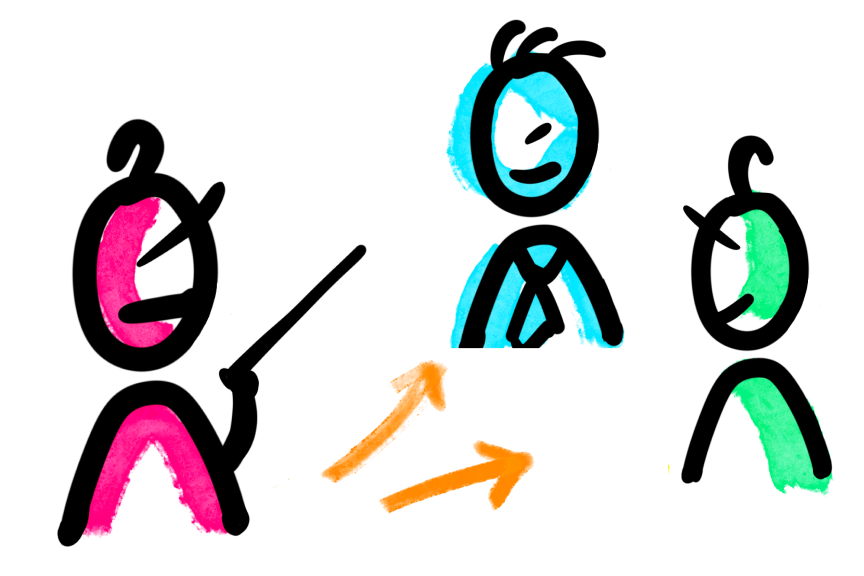
As a facilitator, I see it as my responsibility to capture every piece of information. My goal is to keep participants solely focused on the workshop context. When crucial elements are mentioned verbally, I take on the pressure to translate their thoughts onto paper. However, in longer workshops, this can be quite exhausting. In contrast, observing Jake, if he wasn't sure how to phrase ideas on a sticky note, he would simply ask the participant to do it. This reduces the pressure of always capturing ideas without altering their meaning. Jake emphasized that we should be willing to ask for help, stating, "In the end, people want you to succeed."
2. Make it easy to take decisions.

As a facilitator, your role is to assist participants in connecting the dots, empowering them to make informed decisions. To achieve this, offer diverse explanations and reinforce essential information to guide their decision-making. In my observations of Jake, I've seen him go the extra mile. For instance, he would retrieve a crucial sticky note, representing key information for decision-making, and break it into several smaller ones to enhance digestibility. This approach makes it easier for the decider to make a decision.
3. Going the extra-mile to create a safe space.

If you want participants to contribute freely in your workshops, you need to create a safe space. Jake excels at this, he ensures clarity by rephrasing when needed. If someone doesn't understand what he's asking, he takes the blame and says something like, "Sorry, I wasn't clear enough. Let me explain it in a different way." When someone asks a question or makes an error, he carefully chooses his words, avoiding any potential harm.
4. It’s OK to change your mind.

Sometimes in the session, you could see Jake adapting his workshop on the fly. He would begin by providing a guideline, and within a minute, he would identify a better approach to achieve the desired outcome from the group, and he does it without hesitation. As facilitators, we often feel the pressure to analyze situations and act almost instantly. However, this showed me that it's ok to take the time we need and even change our plans if we believe it's in the best interest of the group.
5. Never stop managing workshop participants’ energy.
Jake is really good at keeping everyone's energy up during workshops. He takes nice, long breaks, about 30 minutes. After each break, he makes participants stretch or dance (great energyzer even though it's not my style). Jake also knows how to use music to pump us up, like a pro DJ picking just the right songs. You can tell he plans his workshops with our energy levels in mind. For example, he explained to us that he avoids asking participants to cluster information, even though he knows it can help, because it consumes more energy compared to the value it brings.
6. Take the time to format outputs.

This one tip is more for remote workshops. Jake always takes the time to format workshop outputs. After important exercises, he works on refining ideas, making them clearer by using fewer words and highlighting key parts in bold. He's comfortable with silence and takes the time he needs, knowing it's valuable for the team. He ensures that each output looks similar to avoid any bias.
It's honestly been quite some time since I've been in the shoes of a workshop participant, and rejoining that experience was truly refreshing. It reminded me of the challenges they face during workshops. I'm curious to see if I will pay attention to other things at my next workshop. That said, following the success of the first facilitation training, I'm hosting another free 3-hour session at the end of the month. Feel free to comment if you'd like to join.
For more content on facilitation, feel free to follow me on linkedin ! I regularly write about workshop facilitation and how it can help your team solve big problems, generate new ideas and make the right decision faster.