

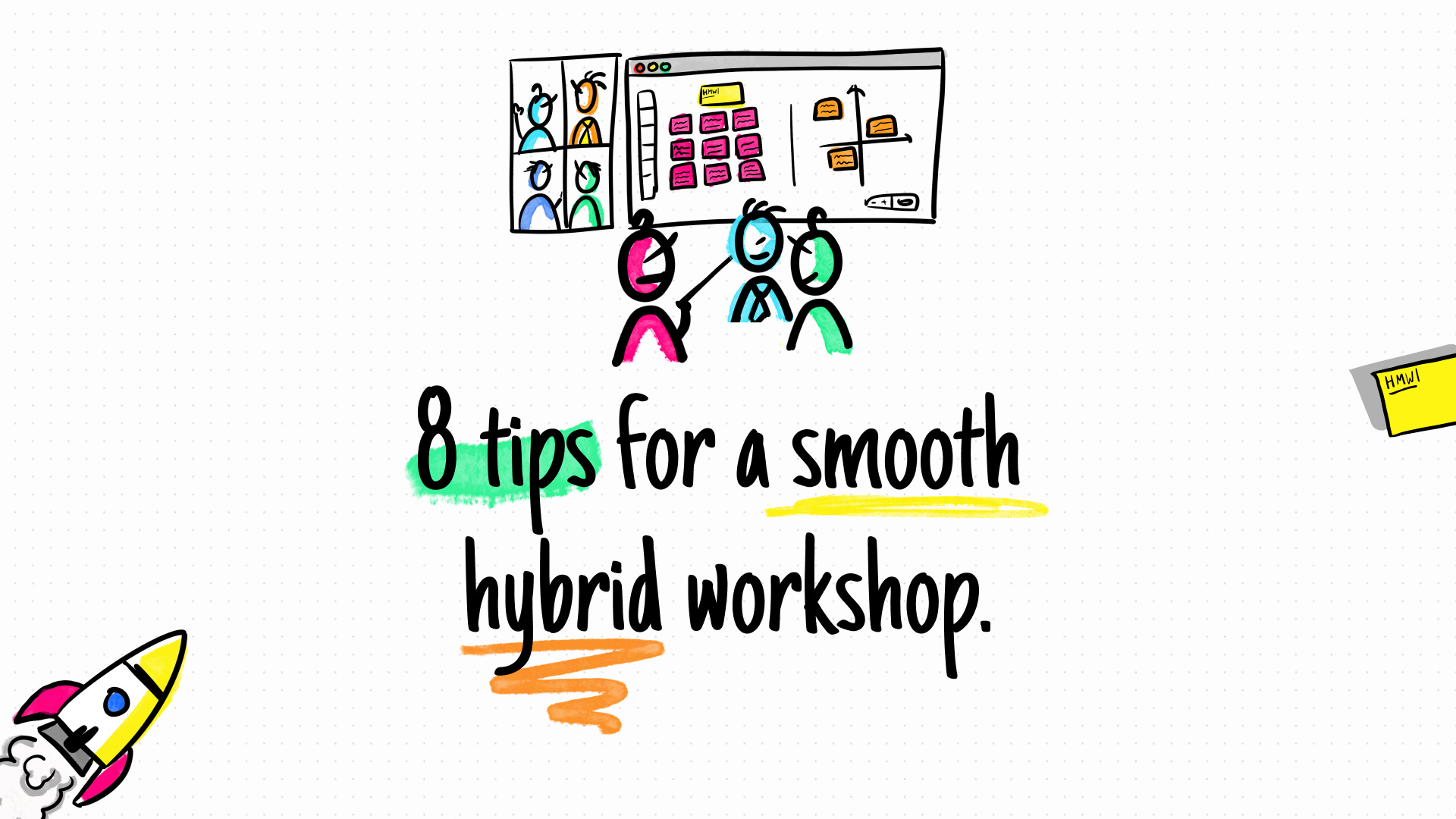
8 tips for a smooth hybrid workshop.
How to adapt workshops to Today’s Work Realities ?

I’m not a big fan of hybrid workshops. End of the post, thanks for reading the Facilitator’s Corner Newsletter...
Just kidding. 😂
If I can, I’ll always try to avoid facilitating hybrid workshops. But I get it, they can add value, especially with how the pandemic has reshaped work dynamics. With remote work and teams spread across different locations, organizations need to find their magic formula for better collaboration.
Before I dive into my 8 tips, here’s some advice: If you’re offered a hybrid workshop gig, just RUUUUNNN !

But seriously, if you have the chance to guide your client, suggest either an in-person workshop or a fully remote one. Explain that both options require less preparation, fewer resources, and tend to be more engaging than a hybrid session.
However, if they really want to bring people together and some can’t be in the same place, and if they believe the group will benefit from being together in some way (whether virtually or physically), then you need to go for it.
Alright, don’t worry, I’m going to help you survive and still deliver a great workshop experience. Here’s are my 8 tips to do so
#1: Get the workshop participants ready

Make sure to schedule an onboarding session with the participants where you’ll outline the workshop’s objectives, set ground rules, and walk them through the tools you’ll be using. If anyone is unfamiliar with the digital whiteboard or a specific conference tool, give a quick demo to prevent any hiccups during the workshop.
I know it might be tempting to skip this step to save time and avoid the hassle of coordinating everyone’s schedules, but trust me, this will actually save you time in the long run. Plus, it gives you an early sense of the group dynamics, setting the stage for a smoother, more effective workshop.
#2: Great set-up, smooth workshop.
A successful hybrid workshop hinges on ensuring that all your connection tools are functioning seamlessly. Before the workshop begins, it's crucial to conduct multiple tests on the technology, including audio and visual equipment.
Be proactive in identifying and addressing any potential technical issues, with particular attention to sound quality, the most critical factor for a smooth hybrid experience.
#3: Co-facilitation is a must !

While co-facilitation might be seen as a luxury, it’s essential for hybrid workshops. Managing all the elements of a hybrid session—keeping things on track, troubleshooting tech issues, monitoring the chat, and more—can easily overwhelm a single facilitator. The key here is to assign a facilitator to each space: one for those physically in the room and one for the remote participants.
In my experience, the in-room facilitator usually focuses on guiding workshop activities and maintaining group dynamics, while the remote facilitator often handles technical support and ensures the remote participants stay engaged. The remote facilitator should take this into consideration by clearly explaining the activities, repeating important questions from the room, and bridging any communication gaps between the two groups.
#4: Craft the workshop, like it is a remote one.

Making sure both remote and in-person attendees feel equally involved can be tough.
To help with this, it’s a good idea to plan the workshop as if everyone is remote. This way, you can create an inclusive experience that helps remote participants connect and stay engaged.
#5: Establish ground rules

In any workshop, setting clear guidelines for participation is crucial, but this becomes even more critical in the context of hybrid workshops.
With participants in different environments, it's essential to ensure that everyone follows the same rules, regardless of their physical location. (e.g. if you wish to interact, raise your hand on the conference tool you will use)
#6: Create an even playing field

The true challenge of a hybrid workshop lies in maintaining the right balance between remote and in-person participants.
It's natural for the group physically present to unintentionally become the center of attention. As a facilitator, you need to ensure an even playing field to avoid remote attendees feeling like outsiders or like their contributions are less important.
#7: Take advantage of the space

Choosing a hybrid workshop means you have a clear reason for doing so.
If you’re using this format, make the most of having people in the room. Set up small group discussions, mix up the types of media you use, and use physical sticky notes to keep everyone engaged. Make sure to share the results with everyone, no matter where they are
#8: Incorporate enough breaks

Anticipate remote participants getting tired sooner than those present in person.
To counter this, plan for regular breaks : consider a 15-minute break every 60 to 75 minutes, based on activities’ intensity and participant energy levels. This will give everyone a chance to recharge.
Small bonus:
Here’s an example of an email I send just before the workshop. It includes a reminder of key technical onboarding details and the ground rules (Tip #1 & #5).
Dear all 👋,
I hope you had a fantastic weekend!
We're just one day away from the workshop, and I can feel the excitement building up. I wanted to provide you with some important information about the two half-days we'll be spending together.
As you already know, the workshop will be a hybrid event, meaning that we'll be conducting everything on the computer using Miro. To ensure a seamless experience and avoid any unpleasant echo sounds, I kindly request that you follow these guidelines:
Technical set-up 🧑💻:
Please ensure that you bring your computer and join the workshop room on Butter. I recommend opening the session on Google Chrome for optimal performance.
If you'll be joining us from the XXX offices, kindly use the audio equipment available in the room or opt for the sound from a single computer. To prevent any echoing issues, please ensure that all other computers in the room have their volume muted.
Throughout the session, it would be great if everyone could keep their microphones on mute unless they need to speak. If you wish to contribute or have a question, you can use the hand-raising feature in Butter to let us know.
Also, don't forget to keep your webcam on and position it properly so that all participants can clearly see you during our discussions and activities.
Here's a sneak peek of what awaits us on Day 1 of the XXX Workshop:
Workshop Kick-Off 🚀
Why are we here? 🤔
Strategy 🧠️
Bonus Activities 🤩
Our afternoon will be filled with engaging content and valuable interactions. I understand that we all have busy schedules, but let's resist the urge to check emails or get distracted (even if we believe we are great multitasker 🤓). This workshop demands our complete focus and attention.
Additionally, as we'll have a significant number of participants, punctuality will be crucial to stay on track with our agenda. Kindly join the workshop at 12:50 CET to allow ample time for the technical set-up.
To access the Butter session, simply click on the following link : XXXX
Looking forward to creating some magic together during this workshop. Let's collaborate, learn, and lay the foundations for exceptional XXX!
Cheers,
Mehdi
Are you ready to nail your next hybrid workshop ?

Follow these 8 tips, and you might just make it.
Running a hybrid workshop is tough. The real challenge is to keep everyone, both in the room and online, involved and treated fairly. Make sure you understand why you’re using this format, consider having a co-facilitator, choose the right team and space, and keep remote participants actively engaged.
If you handle all these aspects, you'll have a better chance to survive.
Do you want to level-up your facilitation skills ?

If you're interested, the next edition of the Facilitators Corner Cohort starts in October. Join my 6-week program to learn how to confidently design and run workshops for any team and any challenge. This program will transform your career and save you a lot of time on your facilitation journey.
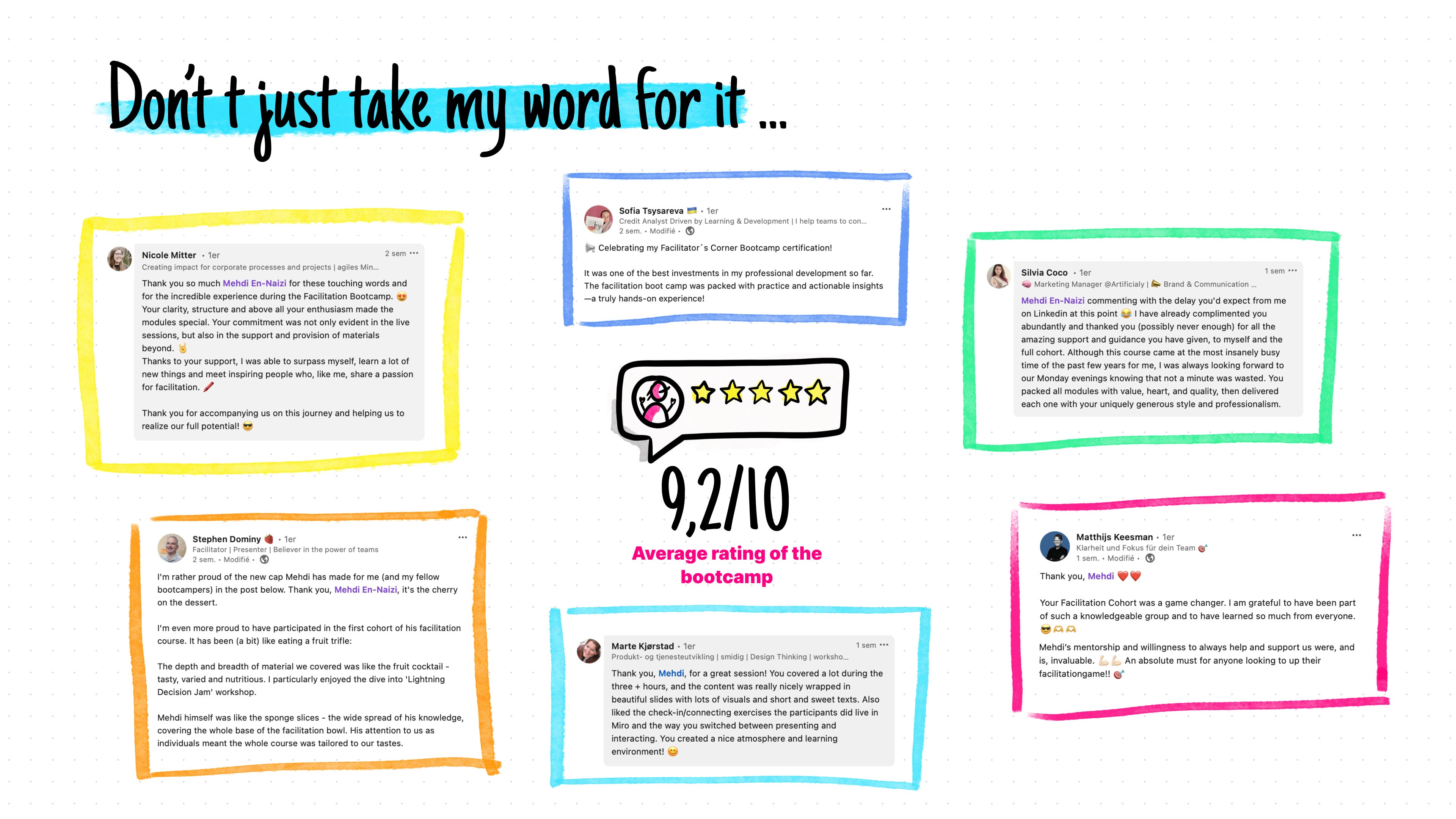
Send me a message if you want more details about the bootcamp. If you book by the end of August, you will get a 15% discount!

For more content on facilitation, feel free to subscribe ! I regularly write about workshop facilitation and how it can help your team solve big problems, generate new ideas and make the right decision faster.