

How to bring experience design into your workshops
5 takeaways from my chat with Romy Alexandra

In my latest podcast episode, I sat down with Romy Alexandra, a learning experience designer and facilitator who’s worked in over 85 countries, to explore what really makes a workshop transformative.
We touched on everything from neuroscience and emotions to structure, spontaneity, and what it means to truly engage people in a learning experience.
I highly recommend giving the episode a listen or watch. But if you’re short on time, here are five powerful takeaways that can shift the way you design and lead workshops, whether it’s a strategy session, team offsite, or creative brainstorm.
1. Ask first, then tell !

Before you dive into content, ask your participants a question. Get them to reflect, share, or define the topic themselves. This makes the experience more personal and meaningful.
👉 Try this : Instead of saying “Creativity is…”, ask “What does creativity mean to you?”
2. Design for transformation, not just information

Workshops shouldn’t just pass on knowledge, they should change how people think, feel, or act. That takes intentional planning, not just throwing in fun activities.
👉 Ask yourself : What should people feel, know, and do by the end of this session?
3. Use experience to drive engagement

People learn best when they’re emotionally involved. Even something as simple as listening to music or sharing a story can spark real reflection and insight.
In the podcast, Romy led a quick experiment where we listened to music and noticed how it made us feel. It showed how powerful it can be to use emotions and the senses in a workshop.
A real “experience” isn’t just doing an activity, it’s about being present, feeling something new, and connecting with it. And sometimes, the most powerful experience comes from letting people share their own stories and past experiences.
👉 Don’t just talk : create an experience, then help people reflect on it.
4. Plan what happens after the workshop

A great workshop doesn’t end when participants leave the room. Romy stressed the importance of actionable takeaways and accountability mechanisms, like:
Ask people what they plan to do after the workshop.
Pair them up with accountability buddies. Studies show you’re much more likely to follow through when you’ve shared your goal with someone (up to 70% more likely!).
Plan a follow-up check-in to see how things are going.
These small steps help turn workshop takeaways into real action; and make follow-through much more likely.
5. Adapt to the group and offer choices

Romy explained that good facilitation should respect different cultures and always give people a choice. Not every group is equally comfortable with creativity, risk-taking, or self-reflection, and that’s okay.
Instead of forcing people to take part in a specific way, create flexible activities that let them engage how they feel most comfortable. This helps everyone feel safe and open to learning.
For example, not everyone will want to close their eyes or draw their emotions and they shouldn’t have to.
👉 Try saying: “You can close your eyes if you’d like,” or “Use words or drawings, whatever works best for you.”
Enjoyed these takeaways?
Then I really recommend watching or listening to the full episode.
A new episode drops every two weeks, so stay tuned!
And if you liked it, leaving a 5-star rating would mean a lot. 🙏
Do you want to level-up your facilitation skills ?

If you’re interested, the next Facilitators’ Corner Cohort kicks off on June 11.
We’ll meet every Wednesday from 5–8 PM CET / 11 AM–2 PM ET for four weeks.
This program is designed to help you confidently design and lead workshops, for any team, any topic, and any challenge. It’s practical, energizing, and will save you tons of time on your facilitation journey.
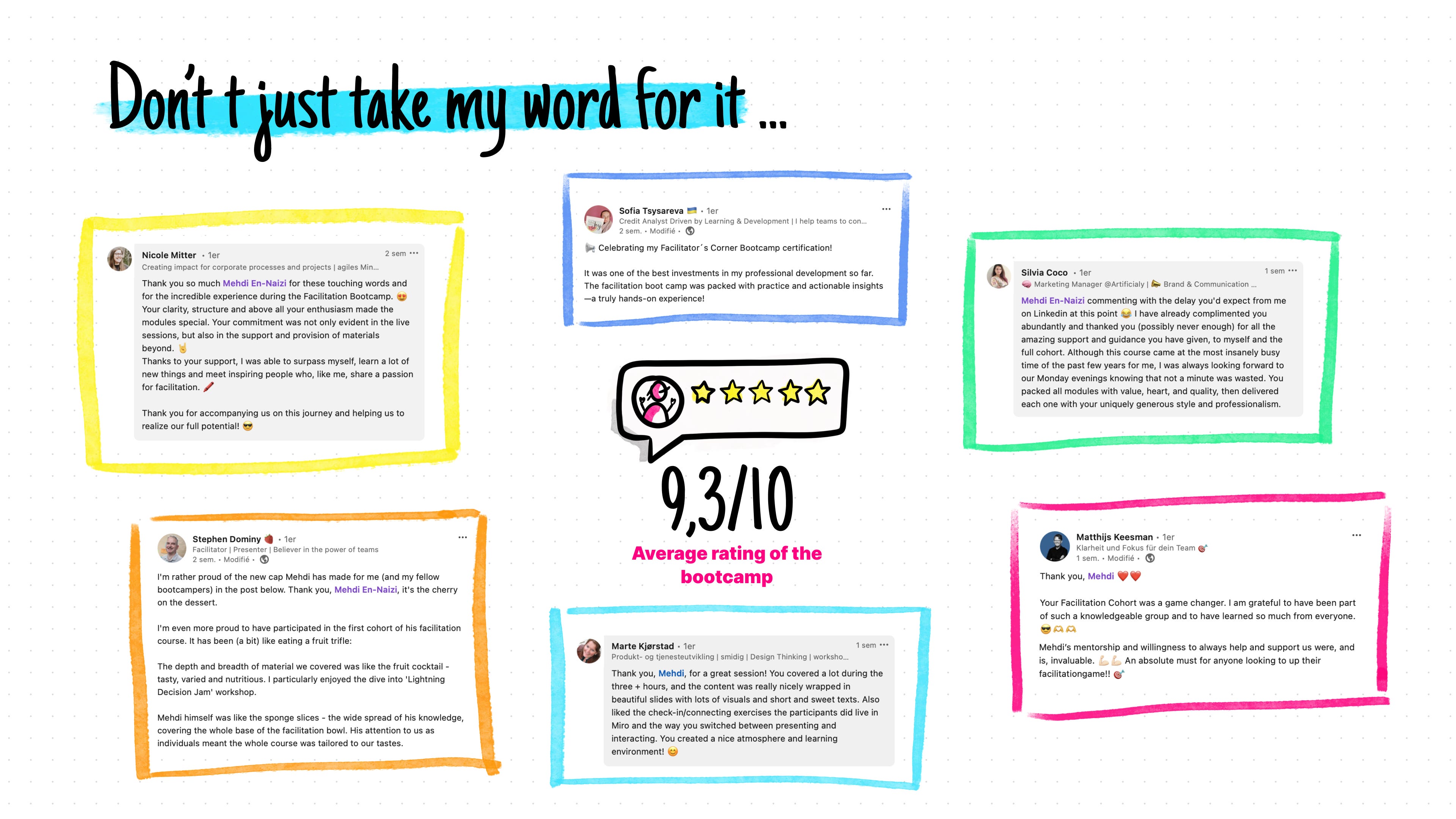
Some people mentioned the last discount code wasn’t working, so I’ve created a new one: Use code FC47 for 47% off your enrollment.
Only 4 seats left, secure yours while you still can.
P.S. I’m also hosting a live session on how to run better brainstorms
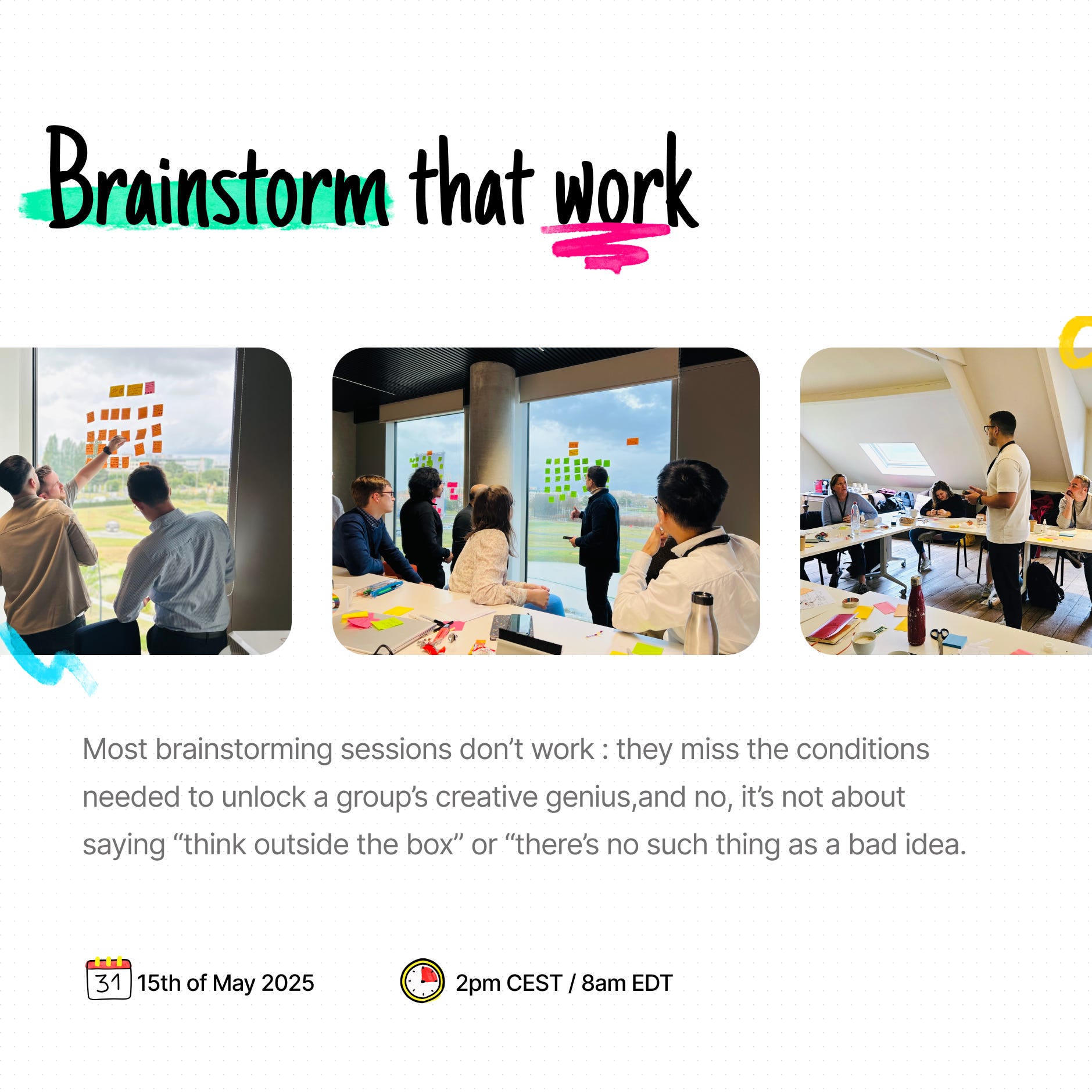
This Thursday, 𝗠𝗮𝘆 𝟭𝟱𝘁𝗵 𝗮𝘁 𝟮𝗽𝗺 𝗖𝗘𝗧 / 𝟴𝗮𝗺 𝗘𝗗𝗧, I’m hosting a live webinar on how to design brainstorms that actually deliver results.
𝗬𝗼𝘂’𝗹𝗹 𝗹𝗲𝗮𝗿𝗻:
✅ Why most brainstorms fail, and what to do instead
✅ How to create the right conditions to spark creativity
✅ Simple, powerful structures for focused idea generation
✅ Advanced facilitation tips to take your sessions even further
No fluff. Just practical tools you can use right away.
It’s free, live, and there won’t be a recording, so make sure to save your spot :