

How to design real connection without being awkward: the campfire method
The Framework Jan uses before picking any activity

A few months ago, I was sitting in a big room as a participant. Not facilitating. Just sitting there, waiting for whatever was coming next.
The facilitator asked us a simple question.
On a scale from 1 to 5, how willing are you to take a risk right now?
Hands went up. Mostly 3s. The room wasn’t cold, but it wasn’t warm either.
Then he ran a great connection activity, the Curiosity Exchange (more on that below).
And he checked in again. Same question, 1 to 5.
This time, mostly 4s and 5s. The room had warmed up enough to take a bigger risk.
And then we did it. A big activity. The kind of activity that, on paper, looks risky. But because of that one small check-in, and one small connection activity in between, almost everyone jumped in.
That facilitator was Jan Keck. The connection guy. And that shift, from a room of 3s to a room of 4s and 5s, is the whole idea behind his new book, The Campfire Method.
Icebreakers are violent. Ice melters are not.
Here’s the image Jan used that stuck with me.
An icebreaker assumes everyone is frozen, and your job is to smash through with a sledgehammer. Some people have a thin layer of ice. Some people have armor. Either way, swinging a hammer at a room full of strangers is going to hurt someone.
An ice melter works differently. You build a small fire in the middle of the room. You don’t force anyone toward it. People step closer when they’re ready. Some take longer than others. That’s fine.
Same goal. Completely different energy.
The two questions Jan asks before picking any activity
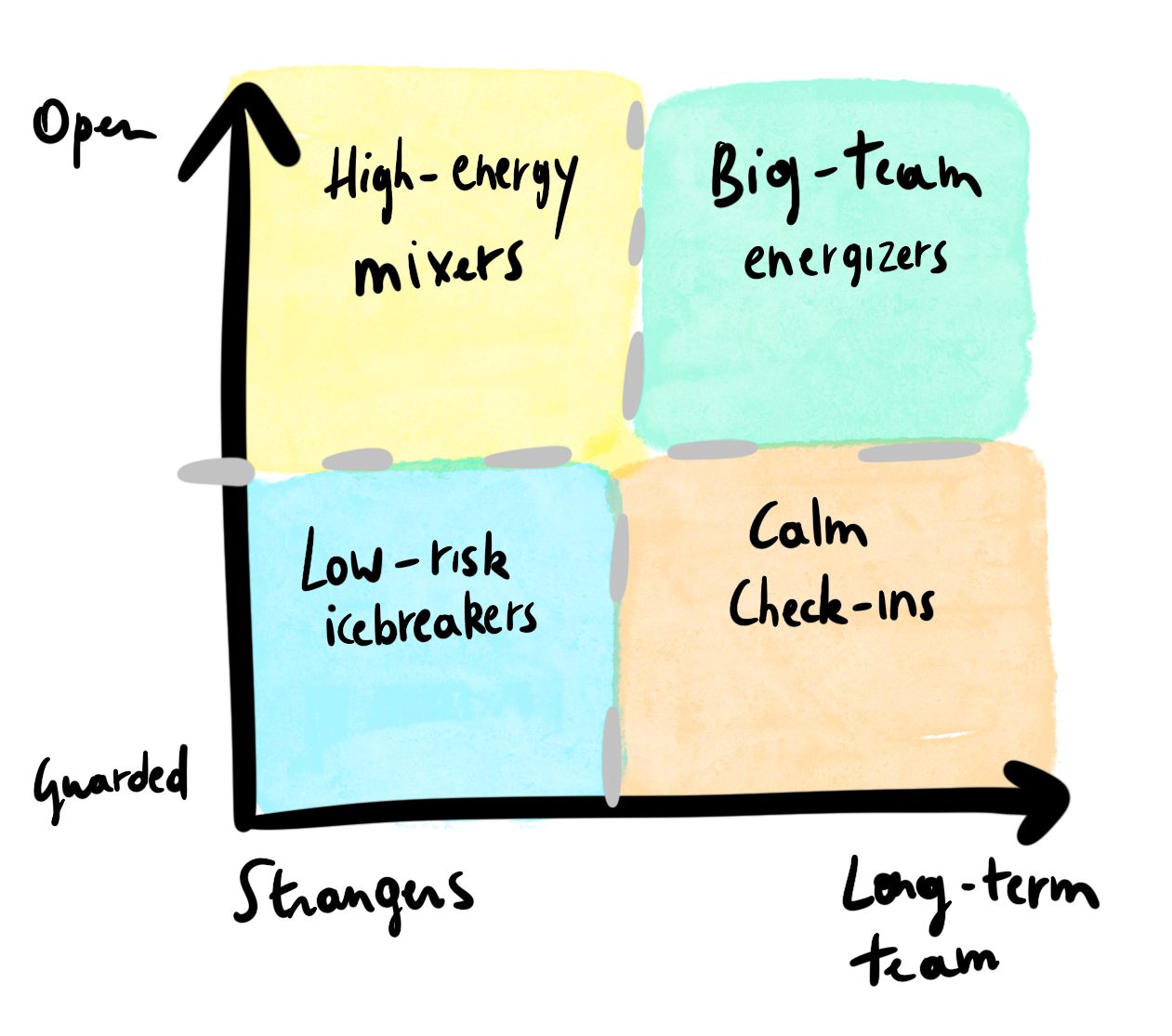
Before Jan chooses a single activity, he asks himself two things.
How well does this group already know each other? Strangers need something different than a team that’s worked together for years.
How guarded is this group? A room of summer camp counsellors will happily do something loud and silly. A room of finance directors might sigh the moment you ask them to stand up.
He calls this the group readiness matrix. Two simple questions. A completely different session depending on the answers.
One activity, two very different rooms
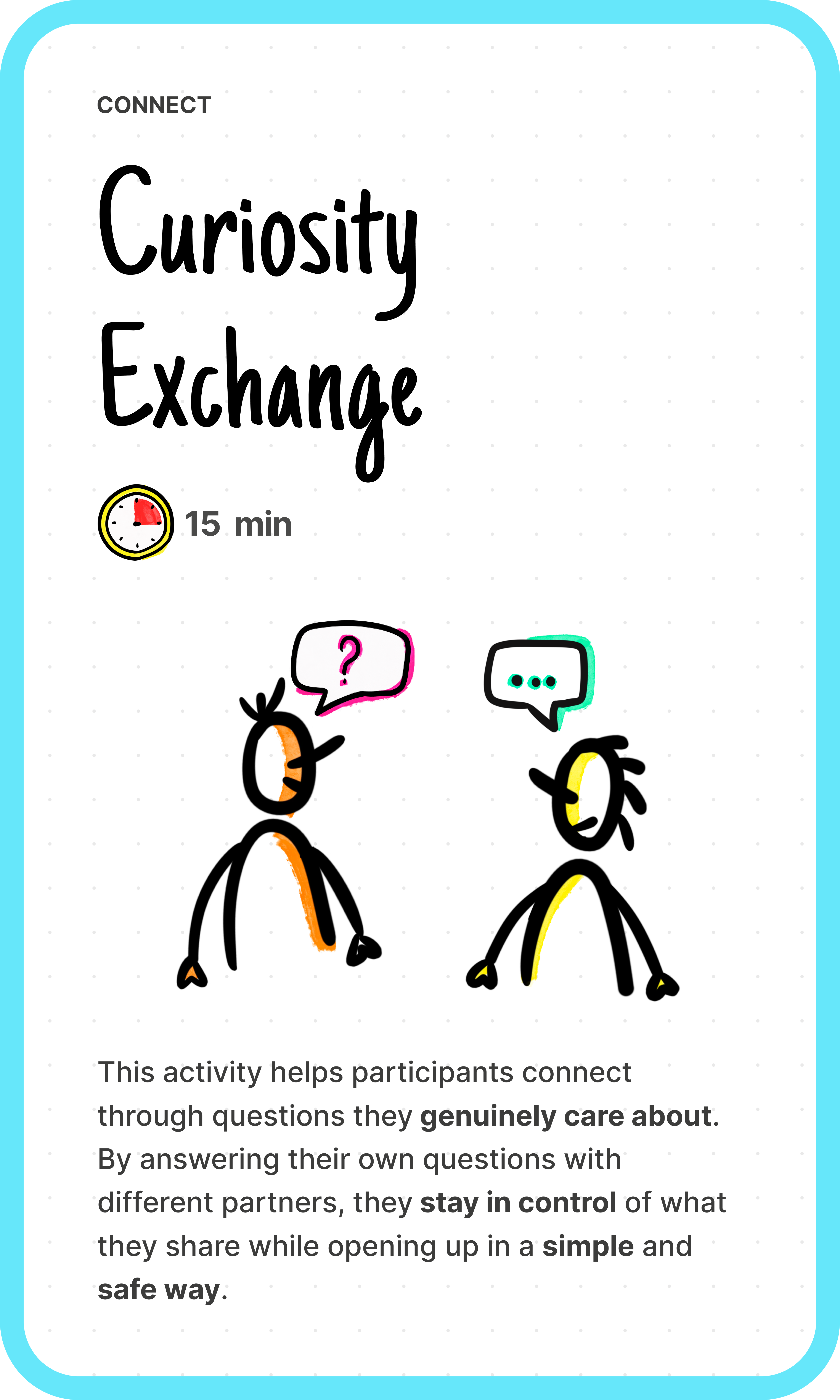
Take the Curiosity Exchange. Everyone writes down two or three questions they’re genuinely curious about, the kind of things you’d love to know about the strangers in the room.
Then comes the twist. You don’t ask your questions to someone else. You pick one of your own, and you answer it.
I’ve run this with a room full of strangers at a Miro meetup in Brussels. People lit up the moment they realised they got to choose what to share. Nobody was put on the spot, because everyone put themselves on the spot, on a question they chose.
I’ve also run it on a team retreat, during a hike, with people who already knew each other well. Same activity, but the questions got sharper.
Same sticky notes. Same structure. Two completely different conversations,
same results: interesting insights and a stronger connection.
That’s the part I keep coming back to. The activity doesn’t change. The room does.
And a good ice melter works either way.
If you want the full breakdown of the Curiosity Exchange, including the why behind it and how it ties into the campfire method, I created an entire resource you can access for free here
You’ll find everything you need for running it:
The Curiosity Exchange card
The Miro template
The full tutorial
The takeaway

You don’t need a bigger toolbox of activities. You need to read the room before you reach for one.
Two questions. How well do they know each other, and how guarded are they. Answer those first, then pick your activity, not the other way around.
And if something feels off mid-session, like Jan experienced when a risk check-in came back lower than expected, don’t push through the plan. Slow down. Build the fire a little longer before inviting people closer.
If you want to know more about the campfire method, you can order Jan’s book here!
One more thing
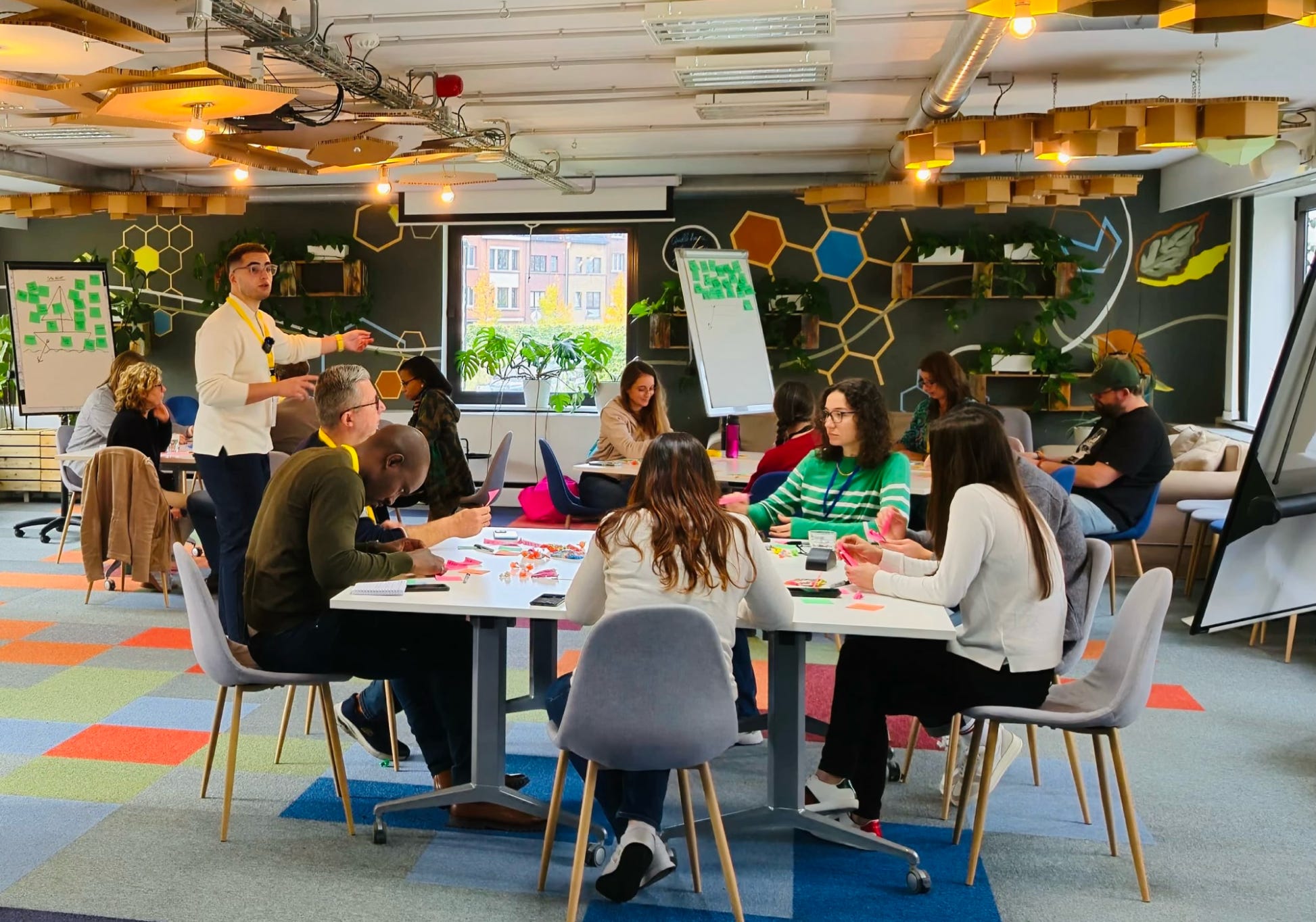
There are still a few spots left for the Workshop Design Masterclass in Utrecht, June 24-25.
Two days, in person, ten people max.
You’ll leave with a workshop design you built yourself, on a real brief, with feedback from me and the group.
But also with the framework, the tools, and the process to design every session after that.
The goal isn’t one good workshop. It’s walking into every room with confidence, knowing your workshops will deliver.
If you’ve been running workshops and wondering why some land and some don’t, this is where you figure it out.
As a newsletter subscriber, use the code FC at checkout for 10% off. That’s €149 off.
And here’s the part that’s especially relevant if you’re based in the Netherlands.
Part of the investment may be reimbursed through a Dutch training subsidy, up to a third of the cost.
→ More on the subsidy here: https://werktuigppo.nl/voorpagina/toewijzingscriteria/
There’s also a money-back guarantee. If after Day 1 you feel it’s not for you, I’ll refund you, no questions asked.
Questions? Just reply, or book a quick call.
Thanks, Mehdi!