

How To Design World-Class Workshops
5 things every facilitator can learn from Dee Scarano

Hey facilitator friends,
Recently, I had the chance to sit down with Dee Scarano on my podcast.
The episode quickly became the most watched and listened one so far, so I thought I’d share a summary with you, along with the 5 biggest takeaways from our conversation.
Dee is one of the most respected facilitators in the game (some even call her the Beyoncé of workshops). She’s facilitated workshops for teams at Google, Microsoft, LEGO, and more.
In our chat, she broke down the most common mistakes facilitators make, and how to avoid them.
Here are the 5 key lessons you can apply right away 👇
1. Without the right info, you can’t design properly

Duh.
Too many workshops fall apart because the facilitator didn’t ask the right questions before the session even began. Dee highlights the importance of deep stakeholder discovery: understanding the team’s goals, potential tensions, power dynamics, and hidden expectations.
Here’s some of the less obvious questions she shares in the podcast that can help you do that
What level of buy-in do you have from senior decision makers?
What’s the broader company culture around collaboration, risk, and innovation
Are there tensions or politics between any participants?
Are people being told to attend, or did they opt in?
This also means knowing who really needs to be in the room and what compromises you’re willing to make.
Dee even uses a trade-off slider with clients to visually map where expectations may not align with constraints like time or team availability.
Brilliant canvas that you can see in the video.
2. Use neuroscience to design better workshops
Facilitators often focus on tools and activities but forget that people’s brains need time, space, and structure to process.
Dee explained that the best facilitators design with this in mind, even if they don’t call it “neuroscience.”
Some people work fast and love quick brainstorming.
Others need time to reflect quietly. If your workshop is packed with back-to-back activities and no breathing space, you’ll lose people.
"If your entire workshop is back-to-back activities without thinking time, some people will disengage."- Dee Scarano
Here are some of her tips
Give people space to work both together and alone
Balance active time with silent time
Allow participants to submit ideas overnight
Designing for different brain speeds makes a massive difference in engagement and outcomes.
3. Psychological safety is built Into the process, not just declared
We’ve all heard that cliché facilitator line: “This is a safe space.”
But saying it doesn’t make it true.
Dee referenced a study from Google where they followed 180+ teams and found one key driver of success: psychological safety.
Real safety doesn’t come from words, it comes from how you design and facilitate the workshop.
Chances are you’re already doing some of this without naming it. For example:
Using same-color sticky notes
Running anonymous voting
By anonymizing ideas, people feel safer to share because they’re less afraid of judgment.
As Dee says: “Safety isn’t about saying the words. It’s about how you design the room.”
And here’s the nuance: you don’t always need it. With teams that already trust each other (like innovation squads who are used to working together), removing anonymity can actually spark deeper discussion.
An elite facilitator, as Dee calls it, knows when psychological safety is essential, and when a group is mature enough to move without it.
4. Templates won’t save your workshops
Templates are useful for inspiration, but elite facilitation is about making intentional choices. Dee never runs the same workshop twice. She adapts every session to the team’s context, goals, people, and culture.
"If you’re optimizing for speed instead of results, you’re doing it wrong."
Frameworks and recipes can help, but they’re only a starting point. You need to understand the why behind the flow, then twist, adapt, and remix it to fit what you’re trying to achieve. That’s what sets you up for real success.
5. Her magic recipe to design world-class workshops
Dee walks through her 4-step workshop design process:
Ask better questions (and more of them)
Choose the right methods from your library
Check for balance: thinking vs doing, solo vs group, fast vs slow
Plan with intention, not habit
Every step is mapped visually. Every decision is on purpose. And the result? Better workshops. Happier clients. And a reputation as a pro.
If you want to go deeper, Dee’s program The Elite Facilitator covers all of this. You’ll get access to practical resources (including the canvases she shared in the podcast) and live coaching directly with her.
Enjoyed these takeaways?

Then I really recommend watching or listening to the full episode.
Spotify :
Apple Podcast :
A new episode drops every two weeks, so stay tuned!
And if you liked it, leaving a thumbs-up or 5-star rating would mean a lot. 🙏
One last thing, I’m finally launching the Worshop Deck
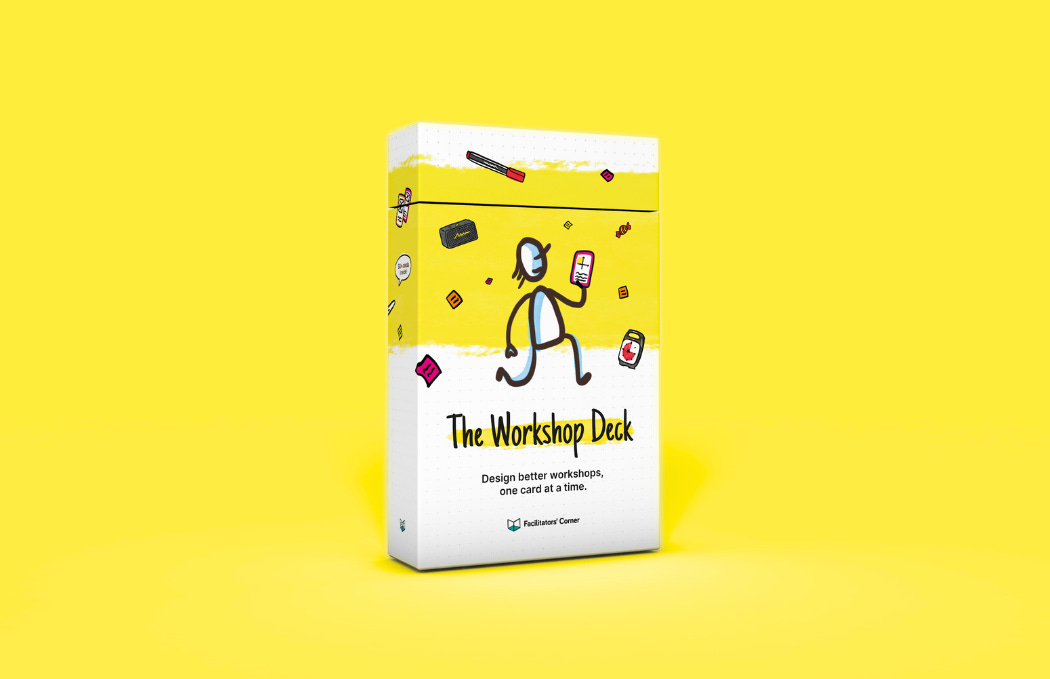
A lot of you have been asking if there’s a way to get the cards without joining the Facilitator’s Corner bootcamp. Now, you can.
I started this project three years ago after hearing the same question again and again from my team and from facilitators I’ve been mentoring:
“What activities should I use to design a great workshop?”
The Workshop Deck is my answer.
It’s a simple, practical tool to help you design better sessions faster and with more confidence.
No more guessing if an activity will work.
No more wasting time scrolling through the Miroverse or the SessionLab Library.
The Deck officially launches in October, but if you want a sneak peek at some of the activities, cards, training videos and a few surprises
For more content on facilitation, feel free to subscribe ! I regularly write about workshop facilitation and how it can help your team solve big problems, generate new ideas and make the right decision faster.